
Monsoon Is Here—So Why Is India Still Running Out of Water?
The Monsoon Paradox Explained
The first showers of the monsoon always bring relief. The smell of wet earth, cooler temperatures, and overflowing roads make it feel like India's water problems should finally be over. Every year, the arrival of the monsoon is welcomed as a sign of relief from soaring temperatures and growing concerns about water shortages. Rivers begin to swell, reservoirs receive fresh inflows, and cities experience days of heavy rainfall. It creates the impression that India's water crisis has been solved for another year. However, this seasonal abundance often masks a deeper reality. Despite receiving significant rainfall during the monsoon, many parts of the country continue to struggle with declining groundwater levels, shrinking freshwater reserves, and recurring water scarcity once the rains are over.
The paradox lies in the fact that more rain does not automatically mean more available water. Rapid urbanisation has replaced natural landscapes with concrete, preventing rainwater from soaking into the ground and replenishing aquifers. Much of the rainfall quickly flows into drains and rivers, while excessive groundwater extraction continues throughout the year. Combined with increasingly unpredictable rainfall patterns caused by climate change, this means that even a good monsoon cannot guarantee long-term water security. The solution is not simply relying on seasonal rainfall but adopting year-round water conservation practices and investing in technologies that reduce unnecessary water consumption.
If India receives some of the world's highest seasonal rainfall, why do so many cities still face water shortages every summer? The answer lies in one of India's biggest environmental paradoxes, rainfall does not automatically mean water security. In fact, even as the 2026 monsoon season progresses, the India Meteorological Department (IMD) has warned that July rainfall is expected to remain below normal across much of the country after an unusually dry June, reminding us how unpredictable rainfall patterns have become.
More Rain Doesn't Always Mean More Water
India receives nearly 75% of its annual rainfall during the four monsoon months (June to September), yet the country remains one of the world's most water-stressed nations. The reason is simple: a large share of rainwater is not stored or absorbed into the ground. In rapidly growing cities, concrete roads, buildings, and pavements prevent rainwater from naturally recharging aquifers. Instead, heavy rainfall quickly flows into stormwater drains, rivers, and eventually the sea. According to government estimates, around 60% of India's irrigation and nearly 85% of its rural drinking water needs depend on groundwater, making groundwater recharge critical for long-term water security.
The challenge is made worse by increasing groundwater extraction and changing rainfall patterns. India is the largest user of groundwater in the world, extracting more water annually than the United States and China combined. Meanwhile, climate change is causing rainfall to become more erratic, with shorter periods of intense rain separated by longer dry spells. This means that even years with normal or above-normal rainfall may not improve water availability if the water cannot be effectively captured, stored, and reused. Sustainable water management, efficient infrastructure, wastewater recycling, and water-saving technologies are therefore essential to ensure that every drop of rain contributes to long-term water security.

Why Indian Cities Still Run Out of Water
1. Our Cities Have Become Too Concrete
India's cities have expanded rapidly over the past few decades, but this growth has come at a cost. Open land, wetlands, parks, and natural water bodies have increasingly been replaced by roads, parking lots, buildings, and paved surfaces. These hard surfaces prevent rainwater from soaking into the soil, significantly reducing the natural recharge of groundwater aquifers. Instead of being absorbed into the earth, rainwater quickly flows into stormwater drains, often overwhelming drainage systems and contributing to urban flooding during heavy downpours.
The impact of this concrete expansion extends well beyond the monsoon season. When groundwater is not replenished, cities become more dependent on reservoirs, rivers, and borewells to meet daily water demand. As groundwater levels continue to decline, water becomes more expensive to access, and shortages become more frequent during dry months. Creating permeable pavements, protecting green spaces, restoring lakes, and incorporating rainwater recharge systems into urban planning are essential steps toward making cities more resilient and ensuring that rainfall becomes a resource rather than runoff.

2. Groundwater Is Being Used Faster Than It Can Recover
Groundwater is one of India's most valuable yet overused natural resources. It supplies around 85% of rural drinking water, nearly 50% of urban water needs, and about 60% of irrigation requirements, making it the backbone of the country's water security. However, demand has grown much faster than nature's ability to replenish these underground reserves. Rapid urbanisation, industrial expansion, and increasing agricultural needs have led to excessive groundwater extraction through borewells and tube wells. According to the World Bank, India is the largest extractor of groundwater in the world, accounting for nearly 25% of global groundwater withdrawal.
The problem is that groundwater recharge is a slow natural process, while extraction happens every day. In many cities, rainwater cannot seep into the ground because of concrete surfaces, further reducing the replenishment of aquifers. As groundwater levels continue to decline, wells need to be drilled deeper, pumping costs increase, and communities become more vulnerable to water shortages during dry seasons. This growing imbalance highlights the need to not only recharge groundwater through rainwater harvesting and watershed restoration but also reduce daily freshwater consumption by adopting water-efficient technologies such as low-flow fixtures, wastewater reuse systems, and waterless urinals, ensuring that groundwater reserves have a chance to recover for future generations.

3. Rainwater Harvesting Isn't Enough on Its Own
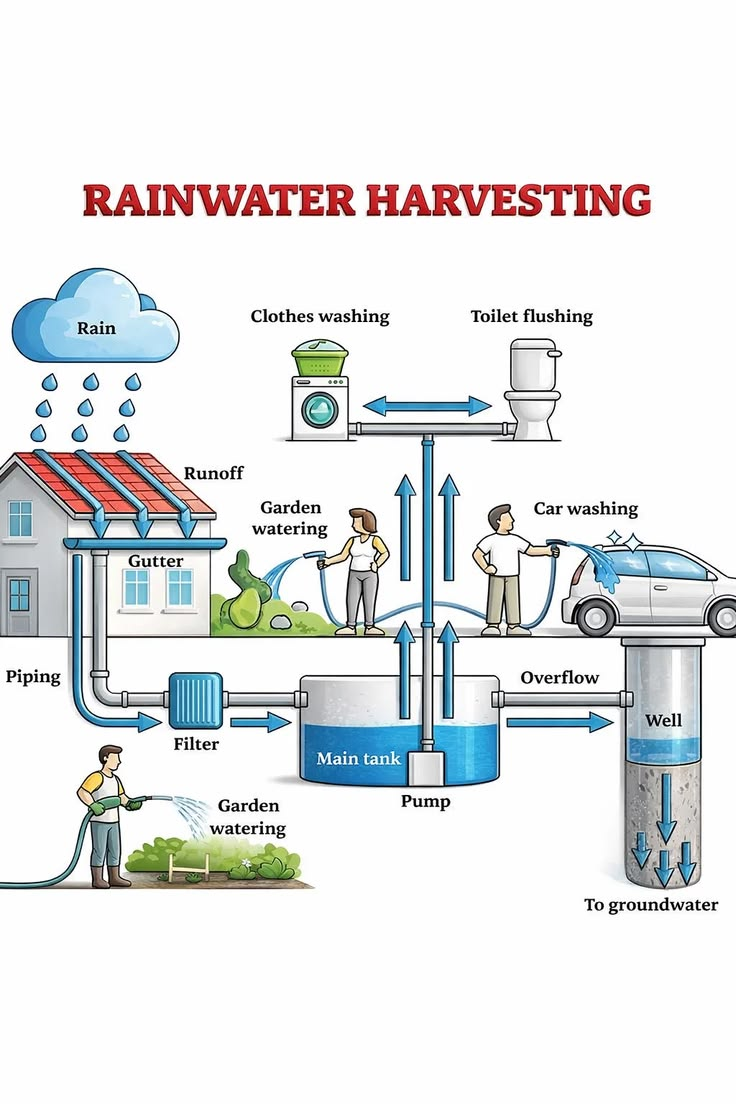
Rainwater harvesting is one of the most effective ways to capture and store rainwater, reducing dependence on municipal water supplies and helping replenish groundwater. Across India, many residential societies, commercial buildings, and industries have adopted rainwater harvesting systems as part of their sustainability initiatives. However, simply installing a system is not enough. Many structures are poorly designed, inadequately maintained, or unable to capture significant volumes of rainwater due to limited rooftop areas, clogged filters, or insufficient storage capacity. Without regular maintenance and proper implementation, the potential benefits of rainwater harvesting are greatly reduced.
More importantly, rainwater harvesting addresses only one side of the water equation supply. Long-term water security also depends on reducing demand. If buildings continue to waste large volumes of potable water through inefficient fixtures, excessive flushing, leaks, and unnecessary consumption, the water collected during the monsoon will never be enough to meet year-round needs. A truly sustainable approach combines rainwater harvesting with water-efficient technologies, wastewater recycling, leak management, and solutions such as waterless urinals that reduce freshwater consumption every single day. Conserving water is just as important as collecting it, and together these strategies create a more resilient and future-ready water management system.
4. Climate Change Is Making Rainfall Less Predictable
Climate change is transforming the way rainfall occurs across India. Instead of receiving steady, well-distributed rain throughout the monsoon season, many regions are now experiencing shorter periods of extremely heavy rainfall followed by prolonged dry spells. These intense downpours often overwhelm urban drainage systems, causing floods and waterlogging, while contributing very little to groundwater recharge. At the same time, delayed monsoons, unseasonal rainfall, and shifting weather patterns make it increasingly difficult for cities, farmers, and industries to plan and manage their water resources effectively. This growing unpredictability means that even years with near-normal rainfall may still result in local water shortages.
Scientific studies have shown that a warming climate is increasing the frequency and intensity of extreme rainfall events while also making dry periods longer in many parts of the country. As temperatures rise, evaporation from reservoirs, lakes, and soil also increases, further reducing the amount of water available for people, agriculture, and ecosystems. These changing weather patterns highlight the need to build resilience beyond depending on the monsoon alone. Investing in rainwater harvesting, wastewater reuse, groundwater recharge, and water-efficient technologies such as waterless urinals can help reduce pressure on freshwater resources and ensure reliable water availability, regardless of how unpredictable future monsoons become.
Water Efficiency Must Become a Year-Round Habit
Water conservation cannot be a seasonal effort that begins with the monsoon and ends when reservoirs are full. India is home to nearly 18% of the world's population but has only about 4% of the world's freshwater resources, making efficient water use a year-round necessity rather than an emergency response. Nearly 70% of India's annual rainfall falls within just a few months, leaving the country heavily dependent on how effectively that water is stored, managed, and used throughout the rest of the year. As urban populations grow and climate variability increases, simply creating new water sources will not be enough, reducing everyday water demand must become an equally important priority.
Building long-term water resilience requires a shift from using more water to using water more wisely. This means fixing leaks, installing water-efficient fixtures, reusing treated wastewater, harvesting rainwater, and adopting technologies that eliminate unnecessary water consumption. The need is urgent: India's Economic Survey 2025–26 reported that the country generates around 112 billion litres of wastewater every day, yet only 28% is treated and only a small fraction is reused. Every litre conserved reduces pressure on freshwater sources and groundwater reserves. Solutions such as waterless urinals allow commercial buildings, industries, airports, hospitals, and educational institutions to save thousands of litres of potable water every year, proving that the most sustainable water is the water we never waste.
Waterless Urinals: Saving Water Every Single Day
One of the simplest yet most effective innovations in commercial washrooms is the waterless urinal.Traditional urinals use potable water with every flush, consuming thousands of litres of clean water each year in offices, airports, malls, hospitals, educational institutions, and other commercial buildings. While a single flush may seem insignificant, the cumulative impact across hundreds or even thousands of daily users is enormous. Waterless urinals offer a smarter alternative by eliminating the need for flushing water altogether, helping organisations conserve freshwater, lower water and sewage costs, and reduce the load on wastewater treatment systems. Unlike rainwater harvesting, which depends on seasonal rainfall, waterless urinals deliver measurable water savings every day of the year, making them a practical solution for long-term water conservation and sustainable building management.
Zerodor Waterless Urinals by Ekam Eco Solutions take this innovation a step further by combining water conservation with superior hygiene and odor control. Using advanced liquid-seal technology, Zerodor allows urine to flow directly into the drainage system while creating a protective barrier that prevents foul sewer gases and unpleasant odors from escaping,without the need for water or electricity. The system is easy to maintain, environmentally friendly, and ideal for high-traffic commercial and public spaces. By helping businesses save thousands of litres of potable water annually while supporting green building certifications and ESG goals, Zerodor demonstrates that sustainable washroom solutions can benefit both the environment and operational efficiency. Every installation is a step toward reducing water waste and building a more water-resilient future.

Why Businesses Should Act Now
Water is no longer just an environmental concern, it is a critical business resource. As freshwater availability becomes increasingly uncertain, businesses across industries are facing rising water tariffs, stricter environmental regulations, and growing expectations from customers, investors, and regulators to operate sustainably. Water-intensive facilities such as offices, manufacturing plants, airports, hotels, hospitals, malls, and educational institutions are under increasing pressure to reduce their environmental footprint while maintaining operational efficiency. Organizations that proactively invest in water-saving technologies today can lower operating costs, strengthen business resilience, and demonstrate a genuine commitment to environmental stewardship.
Adopting sustainable water management practices is no longer a future goal ,it is competitive advantage. Solutions such as rainwater harvesting, wastewater recycling, leak detection systems, low-flow fixtures, and Zerodor Waterless Urinals help businesses significantly reduce freshwater consumption without compromising hygiene or user experience. These initiatives not only deliver measurable cost savings but also support ESG commitments, green building certifications such as LEED and IGBC, and broader corporate sustainability goals. By acting now, businesses can future-proof their operations against water scarcity, enhance their reputation as responsible organizations, and contribute to a more water-secure future for communities and generations to come.
Every Drop Saved Matters
India's water future will not be secured by the monsoon alone, it will be shaped by the choices we make every day. As climate change, rapid urbanisation, and rising water demand continue to put pressure on freshwater resources, conservation must become an integral part of how we design buildings, operate businesses, and manage communities. Every litre of water saved reduces the burden on rivers, reservoirs, and groundwater aquifers, helping ensure that clean water remains available for future generations. Small, consistent actions across millions of homes, offices, industries, and public spaces can collectively make a significant impact on the nation's water security.
The path to sustainable water management lies in combining multiple solutions rather than relying on a single approach. Rainwater harvesting, wastewater recycling, efficient plumbing systems, leak prevention, and innovative technologies such as Zerodor Waterless Urinals all work together to reduce unnecessary freshwater consumption. Every drop conserved translates into lower operating costs, improved resource efficiency, and a smaller environmental footprint. Because sustainability isn't measured only by the water we collect during the monsoon , it's measured by the water we choose not to waste every single day. By making conservation a daily habit, we can build resilient cities, responsible businesses, and a more water-secure future for everyone.
Conclusion
The arrival of the monsoon is always welcome, but it should never give us a false sense of water security. As rainfall becomes more unpredictable and urban demand continues to rise, India must shift its focus from simply collecting rain to reducing unnecessary water use year-round. Water-efficient technologies such as Ekam Eco Solutions' Waterless Urinals offer a practical way for businesses to conserve thousands of litres of water without compromising hygiene or performance. Every installation is a step toward resilient infrastructure, lower operating costs, and a more sustainable future.The next monsoon is beyond our control.
How wisely we use water is not.
Frequently Asked Questions (FAQs)
1. Why do Indian cities face water shortages even after heavy monsoon rains?
Because much of the rainwater flows into drains instead of recharging groundwater. Urbanisation, concrete surfaces, inadequate rainwater harvesting, and excessive groundwater extraction prevent effective water storage.
2. How does climate change affect water availability?
Climate change is increasing rainfall variability. Many regions now receive intense short-duration rainfall instead of evenly distributed showers, reducing groundwater recharge and increasing flood risk.
3. What are waterless urinals?
Waterless urinals are specially designed fixtures that operate without flushing water, using advanced trap or sealing technologies to maintain hygiene and prevent odors while eliminating water consumption.
4. How much water can waterless urinals save?
Depending on usage, a single waterless urinal can save tens of thousands of litres of potable water every year compared to conventional flushing systems.
5. Why should businesses invest in water-saving technologies?
Water-efficient solutions reduce operating costs, improve sustainability performance, support ESG commitments, lower dependence on freshwater resources, and help organizations prepare for future water challenges.


header.all-comments