
The Science of Restroom Odour: Why Urine + Water = Smell (And How Zerodor Breaks the Equation)
- bhumikat1
- Jun 4
- 7 min read
Walk into a restroom and you'll notice something strange.
Walk into almost any public restroom , an office building, shopping mall, airport, or commercial facility ,and you'll likely encounter a familiar smell. Sometimes it's faint, sometimes it's overpowering, but it's there. What's surprising is that this odour often exists even in restrooms that appear spotless. The floors are clean, the fixtures are polished, and housekeeping staff may have cleaned the area just minutes earlier. Yet the unpleasant smell refuses to disappear.
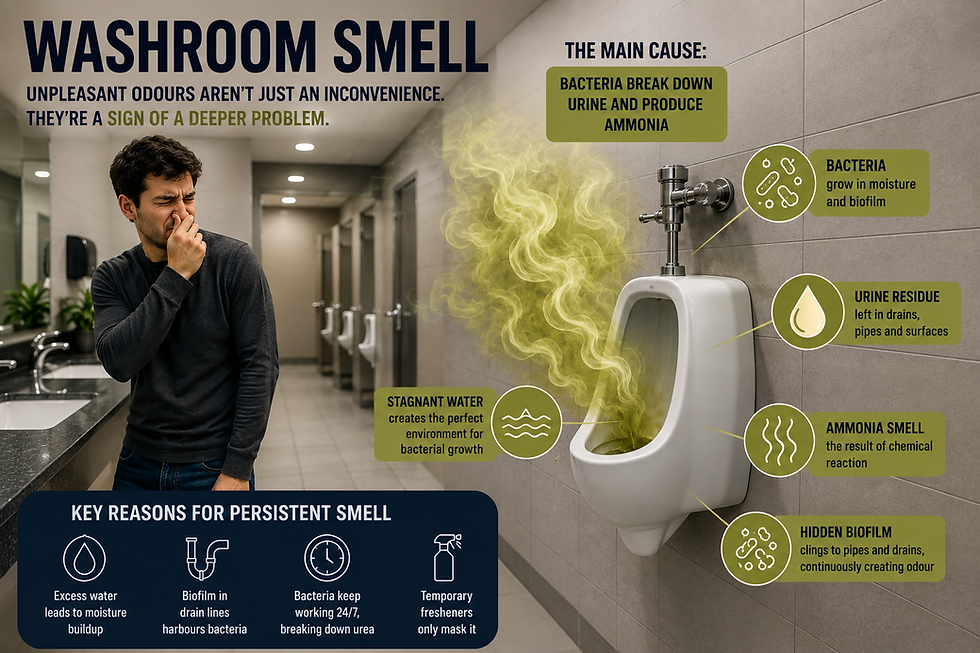
Most people assume the issue is poor cleaning or inadequate maintenance. In reality, the problem runs much deeper. Restroom odours are often the result of an ongoing chemical and biological process happening inside urinals, drain lines, and plumbing systems , far beyond what the eye can see. The smell isn't necessarily a sign that a restroom is dirty; it's often a sign that odour-causing bacteria are actively at work, breaking down urine and releasing compounds that create the characteristic ammonia-like smell we associate with public washrooms.
Let's explore the science behind restroom odours ,and why traditional flushing often makes the problem worse.
The Real Source of Urinal Odour
Many people believe that urine itself is responsible for the unpleasant smell often found in restrooms. Surprisingly, fresh urine has very little odour. The problem begins after urine remains in the urinal, drain, or pipework and comes into contact with naturally occurring bacteria. These microorganisms feed on the urea present in urine and begin breaking it down through a biological process. As this reaction takes place, compounds such as ammonia are released into the air, creating the strong, pungent smell that most people associate with public washrooms.
These bacteria produce an enzyme called urease, which breaks down urea (the primary component of urine) into ammonia and carbon dioxide.The result?That sharp, pungent smell commonly associated with public restrooms. The stronger the bacterial activity, the stronger the smell. Hydrolysis of urea present in human urine generates odour in urinals. The enzyme urease, hydrolyses urea into ammonia and carbamate. The latter compound decomposes spontaneously to carbonic acid and a second molecule of ammonia. The overall reaction can be represented as :
NH2(CO)NH2 + 2H20 → NH3 + NH4+ + HCO3-
Ammonia (NH3) is a colourless gas with a pungent odour. Ammonia exists naturally in air at levels between one part and five parts per billion (ppb) of air. The normal human detection level of ammonia is approximately 50 ppm, some people can detect ammonia gas concentrations as low as 20 ppm.
What makes this issue particularly challenging is that the source of the odor is often hidden from view. Even when the urinal bowl looks clean, bacteria can continue thriving inside drain lines, traps, and other damp surfaces where urine residues accumulate over time. As these bacterial colonies grow, they form layers of biofilm that continuously generate odour-causing gases. This is why a restroom can be cleaned regularly yet still develop persistent smells the real source isn't the visible urine, but the microscopic activity happening within the plumbing system itself.
Why Water Doesn't Solve the Problem
At first glance, flushing a urinal with water seems like the perfect solution. After all, if urine is causing the smell, washing it away should eliminate the problem. This assumption has shaped restroom design for decades, leading facilities to use large amounts of potable water every day for flushing. While water does help remove some urine from the bowl, it doesn't eliminate the bacteria responsible for creating odours. In many cases, small amounts of urine residue remain behind in drains, traps, and pipe surfaces, where bacteria continue to break down urea and release ammonia.
In fact, water can sometimes contribute to the conditions that allow odours to persist. Moist environments provide an ideal habitat for bacterial growth, encouraging the formation of biofilm a sticky layer of microorganisms that clings to pipes and drainage systems. Once biofilm develops, it becomes difficult to remove through flushing alone. The bacteria living within it continue producing odour-causing compounds long after the visible urine has been washed away. This is why many restrooms still smell despite frequent flushing and regular cleaning: the water removes the symptom, but not the source of the problem.
The Hidden Enemy: Biofilm
One of the biggest reasons restroom odours keep returning, even after thorough cleaning, is a hidden layer of bacterial growth known as biofilm. Biofilm is a sticky, slimy coating made up of microorganisms that attach themselves to wet surfaces inside urinals, drain lines, and plumbing systems. Once established, this layer acts like a protective shield, allowing bacteria to thrive and multiply while resisting normal flushing and cleaning efforts. Although invisible to most restroom users, biofilm can become a constant source of odour generation beneath the surface.
The problem with biofilm is that it creates an ideal environment for odour-causing bacteria to continuously break down urine residues and release ammonia. Every flush may remove visible waste, but the bacteria living within the biofilm remain active, producing unpleasant smells day after day. Over time, the biofilm thickens, leading to stronger odours, increased maintenance requirements, and recurring complaints from users. This is why some restrooms seem to develop a persistent smell no matter how often they are cleaned , the real culprit is often hidden deep within the drainage system, quietly working around the clock.
Why Traditional Solutions Often Fail
When restroom odours become a problem, the first response is usually to increase cleaning frequency or use stronger fragrances. Facility managers may introduce air fresheners, deodorizing blocks, chemical cleaners, or more frequent flushing schedules in an effort to keep the restroom smelling fresh. While these measures can provide temporary relief, they rarely solve the underlying issue. In most cases, they simply mask the odour for a short period before it returns, often stronger than before. The result is a continuous cycle of cleaning, spraying, and deodorizing without addressing the actual source of the smell.
The reason these traditional approaches fall short is that they focus on the symptoms rather than the cause. Odour-causing bacteria continue to live and multiply inside drain lines, traps, and biofilm-covered surfaces where cleaning products and fragrances have limited reach. Even after the restroom smells fresh for a few hours, the bacteria remain active, breaking down urine residues and producing ammonia. This means facilities often spend more on chemicals, water, and maintenance while still receiving complaints about unpleasant odours. To achieve long-term results, the focus must shift from covering up smells to preventing the biological conditions that create them in the first place.

Breaking the Equation - Zerodor
What if you could stop the conditions that allow odours to develop in the first place?
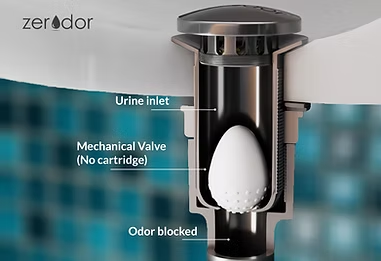
That's the principle behind Zerodor Waterless Urinals. Instead of relying on continuous flushing, Zerodor interrupts the chain of events that leads to restroom odour.
Traditional Equation
Urine + Water + Bacteria + Time = Odor
Zerodor Equation
Urine + Controlled Drainage = No Standing Water = Reduced Bacterial Growth = Reduced Odor
If restroom odours are caused by a chain reaction between urine, water, bacteria, and time, then the most effective solution is to interrupt that chain before odours have a chance to develop. Instead of constantly treating the symptoms with fragrances and chemicals, a smarter approach is to address the conditions that allow odour-causing bacteria to thrive. By reducing stagnant water, minimizing urine residue buildup, and preventing the formation of bacterial biofilm, facilities can significantly reduce the source of unpleasant smells rather than simply covering them up.
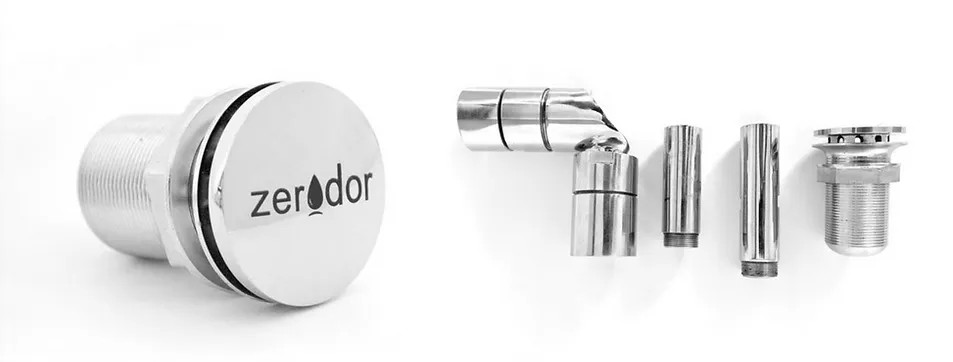
This is where waterless urinal technology changes the equation. Systems like Zerodor are designed to eliminate unnecessary flushing water while ensuring efficient drainage and hygiene. Without standing water creating a favourable environment for bacterial growth, the cycle that leads to ammonia formation is disrupted. The result is a cleaner-smelling restroom, lower maintenance requirements, and substantial water savings. Rather than fighting odours after they appear, the focus shifts to preventing them from forming in the first place a more sustainable and effective solution for modern facilities.
By eliminating unnecessary flushing water and preventing stagnant conditions, the environment becomes far less favourable for odour-producing bacteria.The result is a cleaner, fresher restroom experience without wasting thousands of litres of potable water.
The Sustainability Advantage
The conversation around restroom odours often focuses on hygiene and maintenance, but there's another important factor that is frequently overlooked: water consumption. Traditional urinals use treated drinking water for every flush, often multiple times throughout the day. In high-traffic facilities such as airports, malls, office buildings, and educational institutions, this can translate into thousands , or even millions , of litres of potable water being used annually for a purpose that doesn't require drinking-quality water. At a time when cities around the world are facing increasing water stress, this level of consumption raises important questions about how efficiently we use our most valuable resource.
Waterless urinal systems offer an opportunity to address both environmental and operational challenges simultaneously. By eliminating the need for flushing water, facilities can significantly reduce their water footprint while also lowering utility bills and maintenance costs. The benefits extend beyond conservation; less water flowing through the system means fewer opportunities for biofilm formation, reduced strain on plumbing infrastructure, and a lower environmental impact associated with water treatment and distribution. In this way, sustainable restroom design is not just about saving water , it's about creating smarter, more resource-efficient buildings that support long-term environmental goals without compromising user experience.
Conclusion
The unpleasant smell commonly associated with urinals is often misunderstood. It isn't simply the presence of urine that creates odours , it's the biological and chemical reactions that occur afterward. When urine comes into contact with bacteria, urea begins to break down, producing ammonia and other compounds responsible for that familiar restroom smell. Water, while useful for rinsing surfaces, does not stop this process. In some cases, it can even contribute to the moist conditions that allow bacteria and biofilm to flourish. This is why many restrooms continue to struggle with odour issues despite frequent cleaning, flushing, and the use of fragrances.
The key to long-term odour control lies in addressing the root cause rather than masking the symptoms. By preventing the conditions that encourage bacterial growth and biofilm formation, facilities can create cleaner, fresher, and more sustainable restroom environments. Solutions such as waterless urinal technology demonstrate that effective odour management and water conservation can go hand in hand. As organizations increasingly look for ways to improve hygiene, reduce operating costs, and meet sustainability goals, the future of restroom design will depend not on using more water and chemicals, but on smarter systems that stop odours before they start.
Because the best way to fight restroom odour isn't to cover it up. It's to stop it from forming in the first place.


Comments