
How Zerodha Reduced Water Bills by 50%
THE POWER OF A SIMPLE CHANGE
In operations, there’s a common assumption: meaningful savings require large investments, new systems, or complex upgrades. But in reality, the biggest inefficiencies often hide in plain sight , inside everyday, repetitive processes that no one questions.
Think about it: small actions like flushing, cleaning, or routine water usage happen hundreds or even thousands of times a day in a commercial space. Individually, they seem insignificant. But collectively, they create a massive, continuous drain on resources.
That’s where the power of a simple change comes in.
Instead of chasing large, capital-intensive solutions, high-performing organizations focus on eliminating waste at the source. They ask smarter questions:
Where are we consuming resources unnecessarily?
Which processes run on autopilot without optimization?
What can we remove not just improve?
This shift in thinking is powerful because it transforms sustainability from a “project” into a daily operational advantage.
A simple change , like removing the need for water in a frequently used process , does three things immediately:
Stops recurring waste instead of trying to optimize it
Delivers instant, measurable savings from day one
Requires minimal behavior change or maintenance effort
Unlike large infrastructure upgrades that take months to implement and years to recover costs, simple interventions are:
Faster to deploy
Easier to scale
Lower in risk
Higher in ROI
And most importantly, they compound over time.
When a small saving is repeated thousands of times daily, across multiple facilities, the impact becomes exponential. What looks like a minor tweak turns into a strategic advantage reducing costs, improving efficiency, and strengthening sustainability metrics simultaneously.
Operational excellence isn’t about doing more , it’s about removing what’s unnecessary.
Because in the long run, the smartest businesses don’t just optimize consumption…they eliminate it where possible.
THE CASE
At Zerodha, this mindset was clearly demonstrated under the leadership of Nithin Kamath. Instead of focusing only on high-cost sustainability initiatives, the company took a step back and evaluated where resources were being unnecessarily consumed , especially water.
They realized that a substantial portion of their water usage came from routine, often overlooked activities like restroom operations. Traditional systems, particularly flushing mechanisms, were contributing to continuous and avoidable water wastage. Rather than overhauling entire systems or investing in complex technologies, the approach was straightforward: eliminate inefficiencies at the source.

The Insight
This example highlights a powerful takeaway:You don’t always need large budgets to achieve sustainability goals. Sometimes, the smartest move is identifying high-impact, low-effort changes that deliver measurable results quickly.
Identifying the Hidden Drain
During internal reviews, it became clear that water consumption wasn’t just coming from obvious sources , it was heavily driven by routine usage patterns, especially in restrooms.
High employee footfall meant frequent usage
Traditional fixtures relied on flushing every single time
Water usage was constant, predictable, and largely unmonitored
This is where most organizations stop , they accept it as a “fixed cost.”
Zerodha didn’t.
They treated it as an optimization opportunity.
Rethinking the Approach
Instead of asking, “How do we reduce water usage slightly?” the question became:
“Why are we using water here at all?”
This shift , from reduction to elimination , completely changed the approach.
Rather than investing in complex water recycling systems or expensive retrofits, the focus was on removing the need for water in high-frequency use cases.
This is a critical distinction:
Optimization reduces waste incrementally
Elimination removes it entirely
And elimination almost always delivers faster, more visible results.
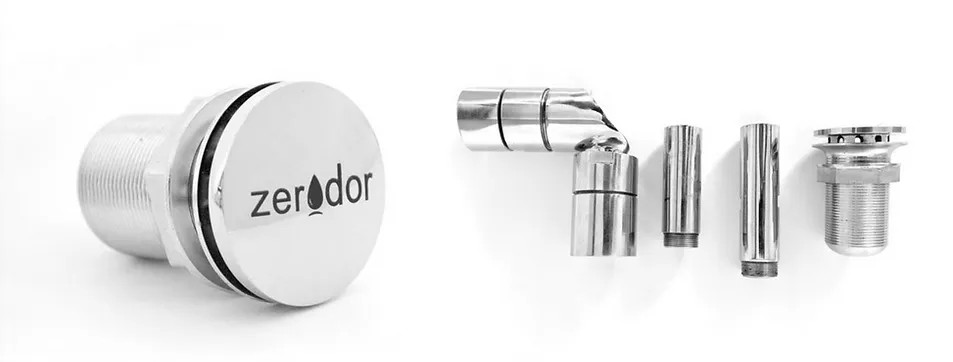
Implementation Mindset
The strategy was simple but disciplined:
Target areas with high repetition and high volume
Prioritize solutions that require minimal behavioral change
Ensure outcomes are measurable and immediate
By focusing on these principles, the company avoided long implementation cycles and instead adopted solutions that could start delivering value almost instantly.
WHAT ZERODHA DID
Zerodha approached the problem with clarity and discipline. Instead of jumping to expensive solutions, they began by evaluating water-heavy processes within their day-to-day operations. This meant closely examining where water was being used repeatedly and whether that usage was truly necessary.
Once these high-consumption areas were identified, the next step was to replace inefficient systems with smarter, more resource-efficient alternatives. Rather than optimizing existing wasteful processes, they focused on eliminating inefficiencies altogether , especially in areas with high frequency of use. At the core of this approach was a balanced mindset: sustainability had to make financial sense. Every decision was driven by a dual objective reducing environmental impact while also lowering operational costs. This alignment ensured that sustainability wasn’t treated as an expense, but as a value-generating strategy.
The Outcome
By adopting smarter alternatives and rethinking daily consumption habits, Zerodha was able to significantly cut down on water usage. The result? A reduction of nearly 50% in water bills ,achieved not through massive spending, but through intentional, data-driven decision-making.
By addressing everyday inefficiencies rather than chasing large-scale upgrades, Zerodha was able to significantly reduce its overall water consumption , leading to nearly 50% reduction in water bills.
But the impact goes beyond cost savings:
Lower dependency on municipal water supply
Reduced load on plumbing and wastewater systems
The results were immediate and measurable. By addressing inefficiencies at the source, Zerodha achieved a significant reduction in water bills, demonstrating how small operational changes can translate into substantial financial savings. Beyond cost reduction, there was also a noticeable drop in maintenance overhead. With fewer resource-intensive systems in place, the need for repairs, monitoring, and ongoing upkeep was reduced, freeing up both time and operational effort.
Additionally, these changes contributed to improved sustainability metrics. Lower water consumption meant better alignment with ESG goals, stronger environmental performance, and a more responsible operational footprint , factors that are increasingly important for modern businesses.
Why This Matters
What makes this case powerful isn’t just the outcome - it’s the approach.
It proves that:
You don’t need massive budgets to drive sustainability
You don’t need complex systems to see real impact
You just need to identify where waste is embedded in daily operations
Because once you fix something that repeats hundreds of times a day,you don’t just save a little , you save continuously.
Key Insight
This case highlights a broader shift in how leading organizations think.
When a tech-first, efficiency-driven company like Zerodha prioritizes something as fundamental as water savings, it sends a clear signal to the market: Sustainability is no longer just about responsibility it’s a smart business decision. It’s about reducing waste, improving efficiency, and building long-term resilience , all while saving costs.
If you’re looking to achieve similar results in your facility, the opportunity is closer than you think.
Explore the ROI calculator to estimate how much water and cost your building can save
Book a demo to see how simple changes can deliver measurable impact from day one


Comments